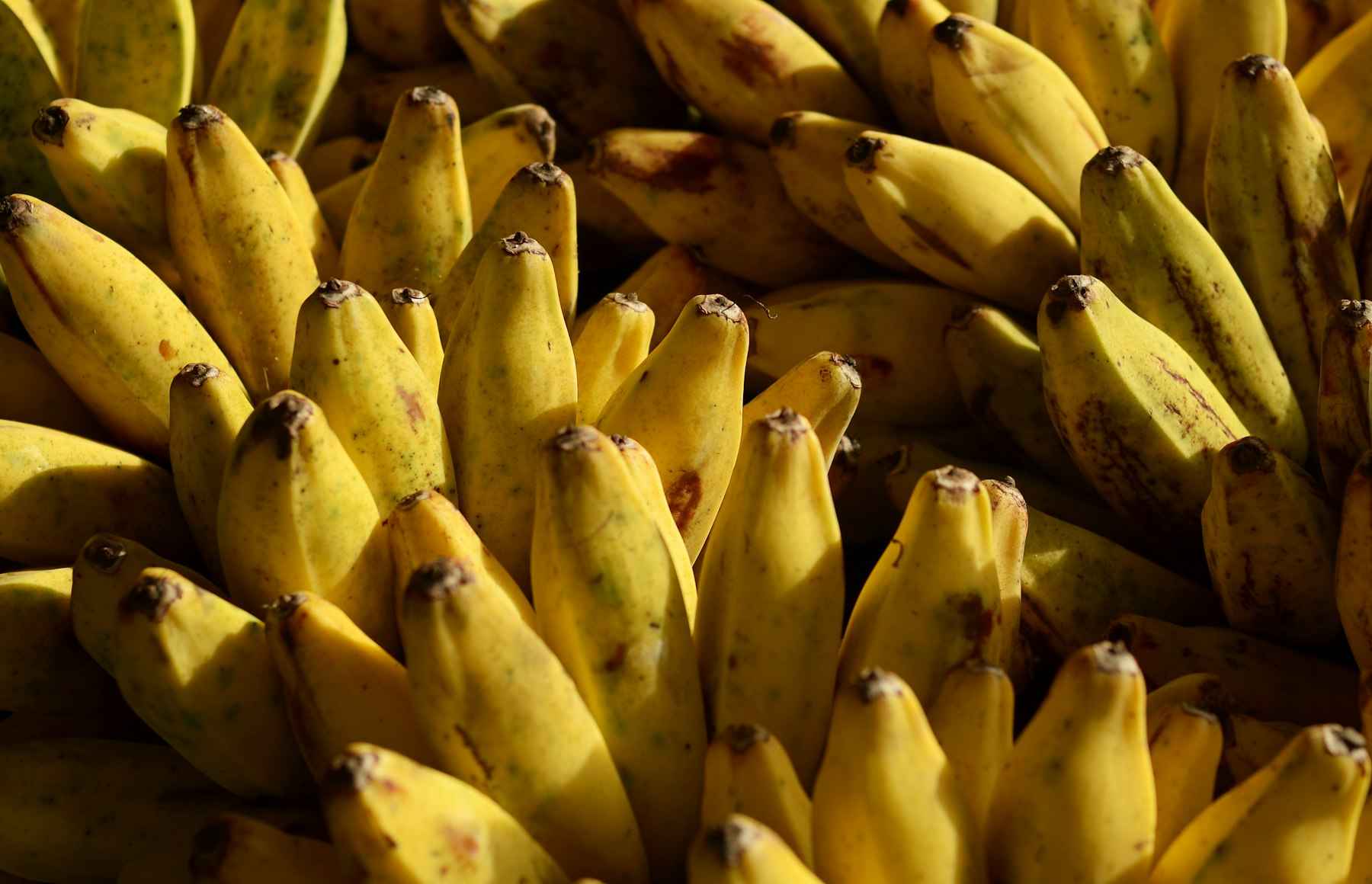
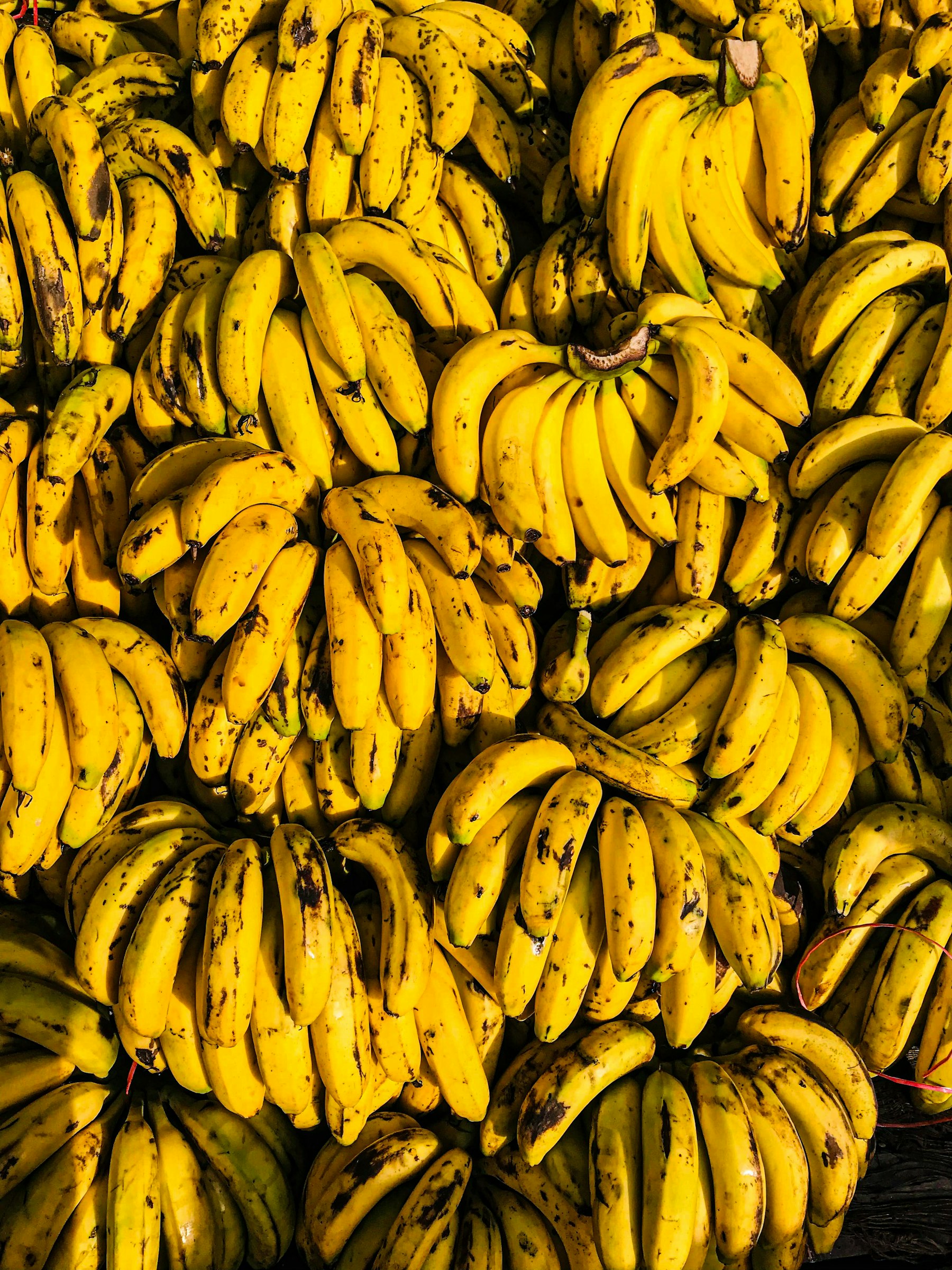
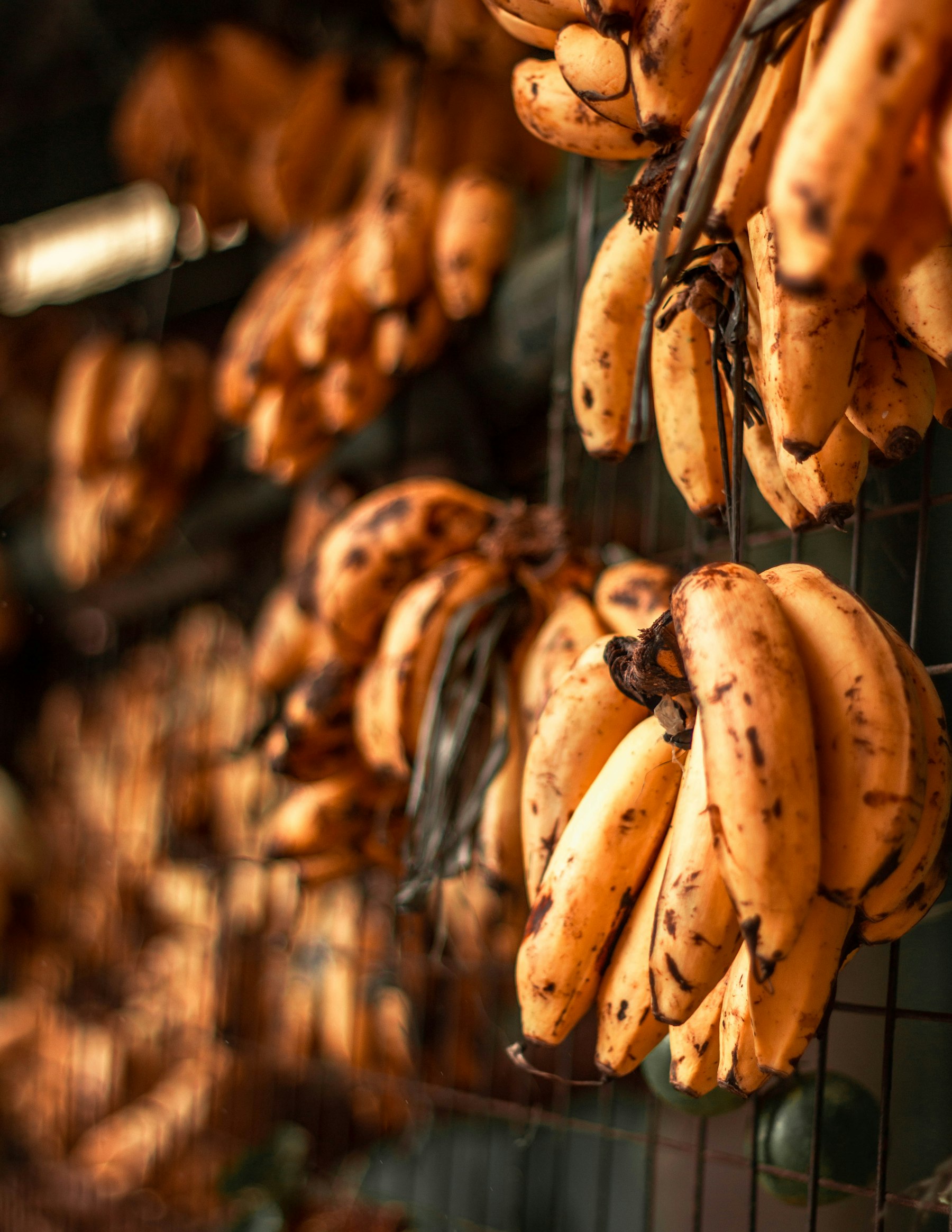
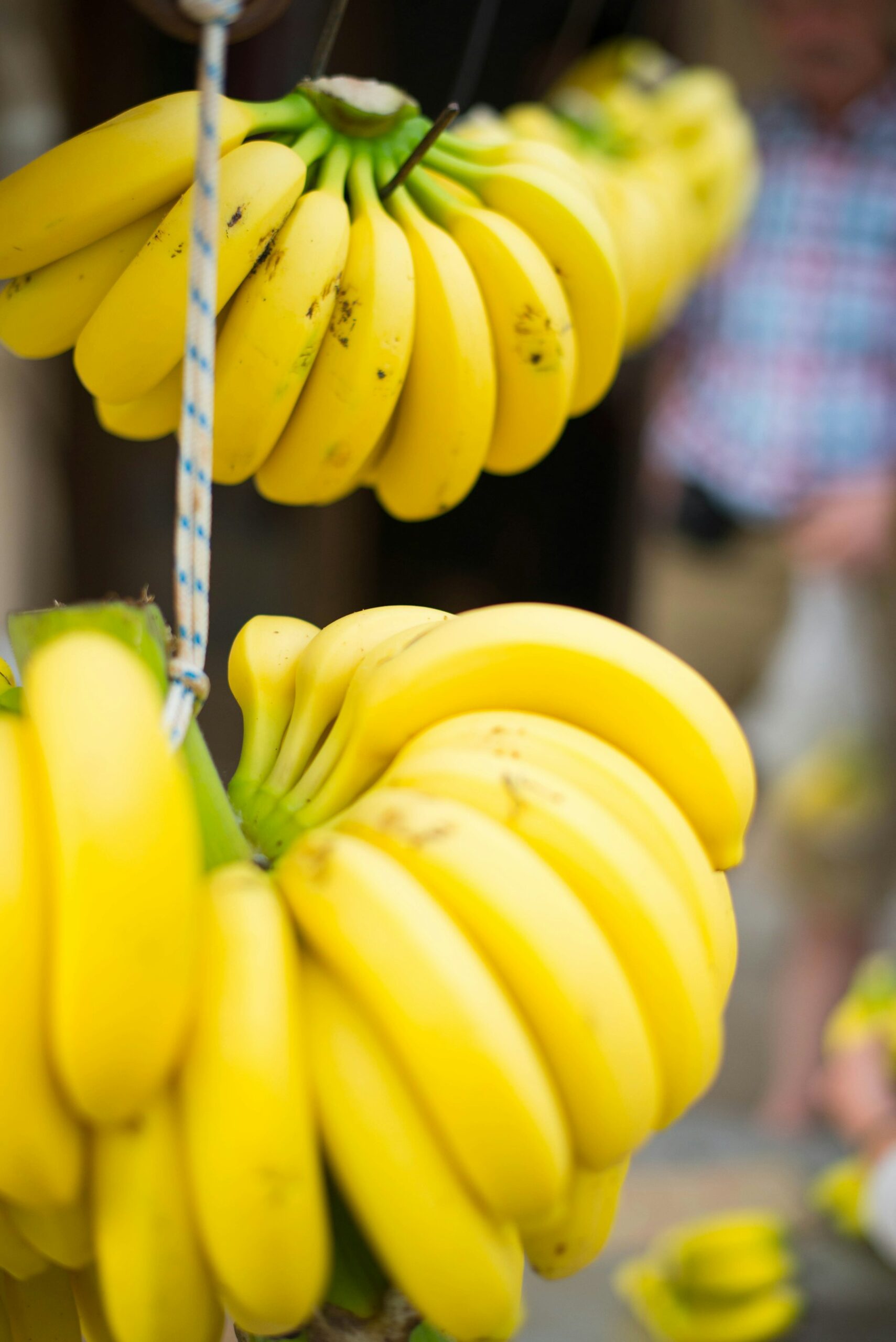
The best variety for you depends on who you sell to and how quickly the fruit moves. A busy supermarket wants Sagor in huge, even volumes. A premium shop will sell Sabri at a better margin. A kitchen buying for curries needs green cooking bananas that never go near ripening gas.
Not every variety is available every week. Harvests rotate across the farm, and we always tell you honestly what is ready before you commit to an order.
Sagor
The everyday dessert banana
Long, evenly curved fingers with a smooth skin that turns a clean, bright yellow. Sagor is the variety most shoppers picture when they think of a banana: sweet, soft and easy to sell in any quantity.
Best for
Fruit shops, supermarkets, offices, schools
Supplied as
Whole bunches, graded hands, green stage 1
Ripening
Ripens evenly in four to five days. Holds well at stage 4 to 6.
Sabri
Small, fragrant and in demand
A shorter, plumper banana with thin skin and a rich aroma. Sabri has a slight tang under its sweetness, and many customers will pay more for it. It bruises more easily, so we pack it in shallower crates.
Best for
Premium fruit shops, gift baskets, home delivery sellers
Supplied as
Graded hands in shallow crates
Ripening
Ripens quickly. Best ordered at stage 4 for sale within two days.
Champa
Firm, slightly tart and long-lasting
Compact fingers with a thicker skin that takes on a warm, golden tone when ripe. The flesh is firm with a gentle sour-sweet balance. Champa keeps longer on the shelf than most varieties, which makes it a favourite for stalls.
Best for
Market stalls, traders on longer routes, roadside sellers
Supplied as
Whole bunches and hands
Ripening
Slow, steady ripening. Stays at stage 5 to 6 for several days.
Amritasagar
Large fruit with very high sweetness
Big, heavy fingers with creamy flesh and a pronounced sweetness. Amritasagar looks impressive on display and is popular with juice bars and dessert kitchens that want maximum flavour from every finger.
Best for
Juice bars, bakeries, hotels, caterers
Supplied as
Graded hands, ripened to stage 6 or 7
Ripening
Ripens fully in about five days. Order at the stage you will use it.
Kacha kola (cooking banana)
Green bananas for the kitchen
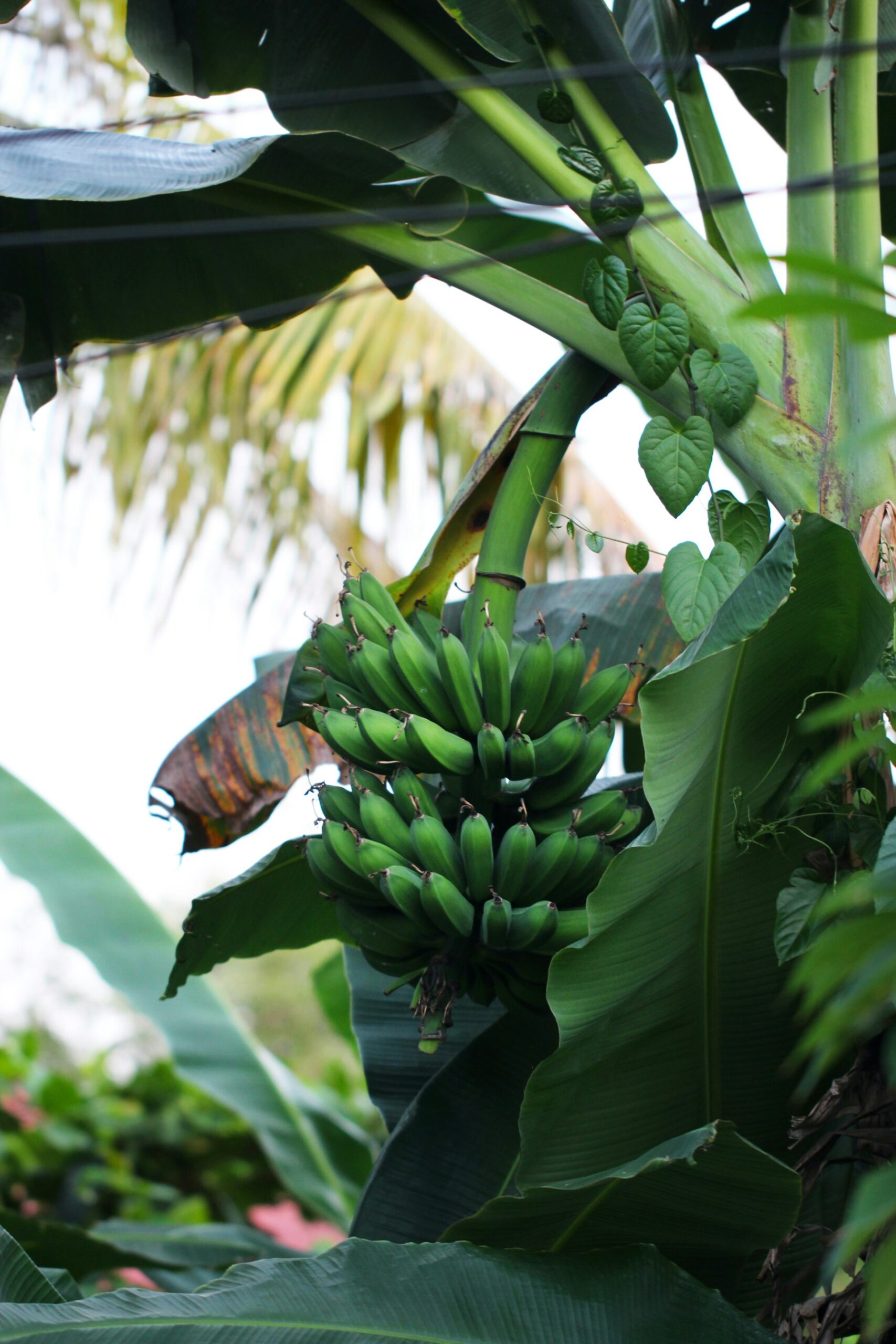
Starchy, thick-skinned bananas that are eaten green and cooked, never ripened. They are used in curries, mashed dishes, fritters and chips. We cut them at full size and keep them away from the ripening room entirely.
Best for
Restaurants, caterers, vegetable sellers, households buying in bulk
Supplied as
Green hands in crates, sold by count
Ripening
Not ripened. Keep cool and shaded and use within a week.
Side by side
A quick comparison for buyers who stock more than one variety. Shelf life assumes a shaded display between 14°C and 20°C.
Variety
Finger size
Taste
Shelf life from stage 5
Typical order
Sagor
Long
Sweet, mild
3 to 4 days
Hands in crates
Sabri
Short, plump
Sweet with a tang, fragrant
2 to 3 days
Shallow crates
Champa
Short, firm
Sour-sweet
4 to 6 days
Bunches or hands
Amritasagar
Large
Very sweet, creamy
2 to 3 days
Hands at stage 6 to 7
Kacha kola
Large, thick-skinned
Starchy, cooked green
Up to 7 days green
Green hands by count
Keeping bananas at their best
Most banana waste happens after delivery. These habits will add days to every crate.